Unsolicited late-night thoughts: Placements
Written at 2:36 a.m. — a preparation strategy in four verticals, and the things I wish someone had told me a year earlier.

First published on Hashnode
It’s 2:36 a.m. 🌠, Saturday’s dawn is a few hours away. While reading docs on Celery | Django, I just saw a snap notification on my phone, reminding me of a snap-throwback of last year — same day. The snap was of my laptop, where around 11–13 tabs were open. Some were React articles, some were LeetCode and Codeforces problems, one was about how to build an ATS-friendly resume, and the rest were Internshala and LinkedIn jobs. I took a moment → embraced the beauty of that past M.O.M.E.N.T. ⌛ A FLASHBACK is being formed in my mind about how things were exactly 1 year ago.
Random thoughts 💭 were revolving around my head about placements, projects and internships. There was a sense of fear about how the year 2021 would be. What turns it would take… and so and so and so.
Now I think, I am not alone. It’s not only me who was/is in this situation — almost all my college juniors are also in the same place: multiple tabs open, solving DSA problems 👨🏻💻, making notes 📋, watching project tutorials 👨🏼🏫, sleepless nights 🤯, questioning how 2022 will be 🤔, and aiming their best to ace it 🎯.
Having said that, here are my unsolicited midnight thoughts and tips penned down 📝, that I think will help you out to score a good internship/job offer.
In the first place, you all should have a LinkedIn and GitHub account.
If you haven’t — STOP ❗️
…… Create the accounts right away 🚀
Done ✅
Kudos — let’s connect then 🤝 GitHub, LinkedIn
Preparation strategy 🎯
Let’s break this down into different verticals.
V-1 → DSA and OOP 👨🏻💻
This is just like the bread of the cake, or the foundation of the building. Almost all interviews consist of at least one DSA-based problem, which you need to code. Big companies and good startups have a dedicated interview round based on DSA. So I am sure you guys aren’t gonna miss this 😉
Those who are incognizant about where to start solving problems, you can kickstart here — Beginner array problems 🚀
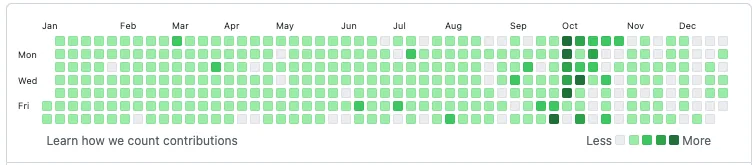
Tip 💡: Remember I told you about GitHub? Here is the scenario where it will shine ✨ — create a DSA repository on GitHub, and make a habit of solving at least 1 problem (though I would recommend solving a minimum of 5) a day and committing it to your repository. Here is how I did it: My Dynamic Programming Journey 🚀
Other important links from where you can practice:
- Binary Search
- Interview questions — LeetCode
- Striver coding problems
- Love Babbar 450 coding problems
- Pre-placement checklists
V-2 → Projects ⚡
This is the vertical I love the most 💖
In my opinion:
Projects >>>>> *Internships
*Internships = where you don’t learn anything new. You don’t have a good learning curve.
I CAN’T EMPHASIZE MORE. JUST START BUILDING PROJECTS NOW. 🙏
Tip 💡: Create a team. A team that motivates you. A team that encourages you to do more. A team that understands you. A great project requires a great team. Here is my team 💖 → Anushka Deshpande, Prajakta Mane and Akash Salvi. Thank you guys for everything! 💫
Bootstrap your own projects. If you need ideas, here is a curated list of various project events and repositories where you can hunt for project ideas.
Summer/Winter of Code 💥
- DWoC
- SIGMM software projects
- NJACK Winter of Code
- SLoP
- Winter of Code
- OpenCode IIITA
- radare2 GSoC ideas
GitHub repos 👨🏻💻
V-3 → English communication skills 💭
This vertical is very crucial but often neglected. Though it’s not like if you don’t know English you can’t score a job, good communication skills make a huge-huge impact on the interviewer — s/he feels a sense of confidence in you, which is a great signal ⭐️
Ways to improve English — books, English newspapers, movi….. Aaah! I’ll leave this up to you.
V-4 → CN, OS, DBMS and other core subjects 💻
Though not every interview has questions on core CS subjects, there are still odds of getting questions around these topics, so better have a basic/intermediate understanding of these subjects, and of how things work under the hood.
- For OS you can refer to Gate Smashers — Operating System on YouTube
- For CN, refer to Gate Smashers — Computer Networks on YouTube
- For DBMS you can practice on SQL — W3Schools
Are you feeling sleepy? I am, though it’s 3:41 a.m. 😂 Let’s sum up real quick 🚀
Climax 📸
- 🔥 GitHub streaks >>> Snapchat streaks. (Maintain your GitHub profile 💯)
- 🧑💻 Be super active on LinkedIn, as you are on Instagram.
- 🗓 Forget weekends. Weekends must be highly productive.
- 📄 Resume speaks. So no spelling errors, no false info, single page and ATS-friendly ✅
- 👬 Take mock interviews of friends a day before the actual one.
- 📩 Cold emailing is a skill. Praful Mohanan is the epitome! 🦄
- 🎯 Solve at least 500 problems. Arvind Patel solved 1000+ (650+ on Codeforces).
- 💭 Communication skills. Practice them straight away. Makes a huge impact. 🌈
- ⚒ Projects are a must. If you skip it, you are on the losing edge. No alternatives. ❌
- 🧠 Hackathons (hirings) are an ocean of opportunity. Arvind Patel is the blue whale 🐳
- 👬 Don’t refrain from asking seniors. It’s now or never.
- ❌ Rejections are a part of this process. Learn from them. Go ahead 🔥
And lastly — all the best guys 💖. Really excited to see what wonders you make and where your destinations are 🚀
Good night! 🌙
Connect with me — Dhruv Kothari